


The Patina Antica path

The knowledge of ancient workshops, handed down over time.
Time cannot be constructed.
It can be understood..
The Ancient Patina is the path that more than any other represents my way of experiencing restoration.
I began working in the early 1990s and, for over thirty years, I have studied materials, the techniques of ancient workshops and the way time transforms matter.
In 2018, I opened my teaching laboratory. Since then, this project has grown alongside the people who have chosen to join us from Italy and many other countries.
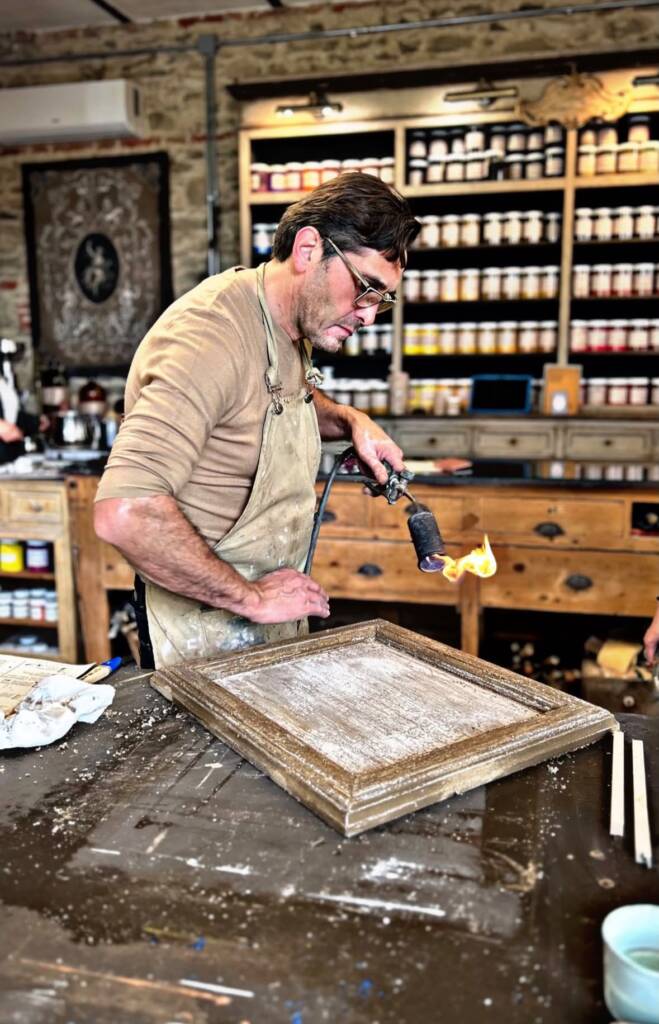
Of all the techniques I've studied and taught, Patina Antica is the one I feel most deeply connected to. Not because it's the simplest. Not because it's the most spectacular. But because, more than any other, it embodies the wisdom of the restorers' ancient workshops. It's not just a technique. It's a language. It's a wealth of knowledge. It's a part of our artisanal history. Over the years, I've learned one thing.
Where the Ancient Patina is born
Antique Patina doesn't originate in cabinetmakers' workshops. It originates in restorers' workshops.
Between the seventeenth and eighteenth centuries, when furnishings began to be considered not just objects of use but testimonies to be preserved, furniture restoration gradually became an increasingly specialized profession.
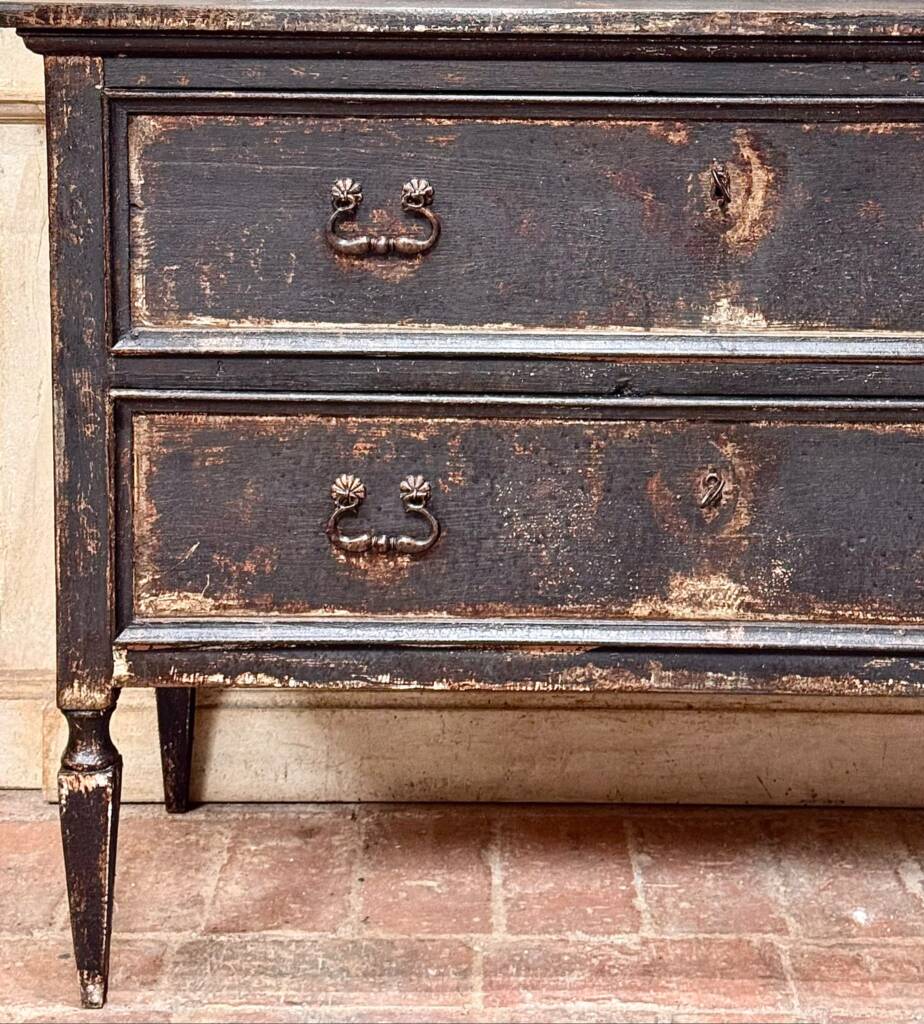
A newly built piece of furniture was new. Time came later. The light. The humidity. Daily use. Hands. The seasons. Everything left its mark. When that piece of furniture returned to the workshop, it wasn't enough to reconstruct a missing part. It was necessary to understand what time had created. The cracks. The glazes. The aging of the pigments. The oxidations. Every detail told a story.
The restorer didn't just reconstruct the piece of furniture. He reconstructed time.
The Restorer's Workshop
The restorer's workshop wasn't the place of a single craft. It was a place where different skills worked together. The carpenter rebuilt the structure. The carver brought the sculpted parts back to life.
The ancient preparations, preparations, and reconstruction of the material followed. When necessary, the decorator intervened, restoring colors and ornamental motifs. Finally, came the patina. The final touch.
The one who connected every intervention. Like a tailor-made suit, he harmonized the new with the old until the restoration was invisible. This was the wisdom of the ancient workshops.
Knowledge passed down from master to student.
A Knowledge that was Conquered
For centuries, this knowledge wasn't preserved in books. It lived in workshops. Every discovery was the result of years of work, mistakes, observation, and patience. For this reason, artisans passed on their craft with great caution. Not out of selfishness. But because they knew how much time, trial and error it took to get there.
Knowledge acquired slowly was entrusted only to those who demonstrated a true desire to understand it.
The Ancient Patina Today
In recent years I too have continued to study, experiment and question my work.
Some insights took time. They weren't yet ready to be taught.
Today I feel that time has come. Today this journey enters a new phase. Not because I reject what I've taught. On the contrary. It's the natural continuation of a journey that began over thirty years ago.
During this journey, I will also share some aspects of my work that, until now, I have never taught. Not because they were secrets. But because some knowledge needs to mature before being transmitted. I have waited for the moment when I felt I could deliver it with the same awareness with which I learned it.
Today I believe that moment has arrived.
The Path
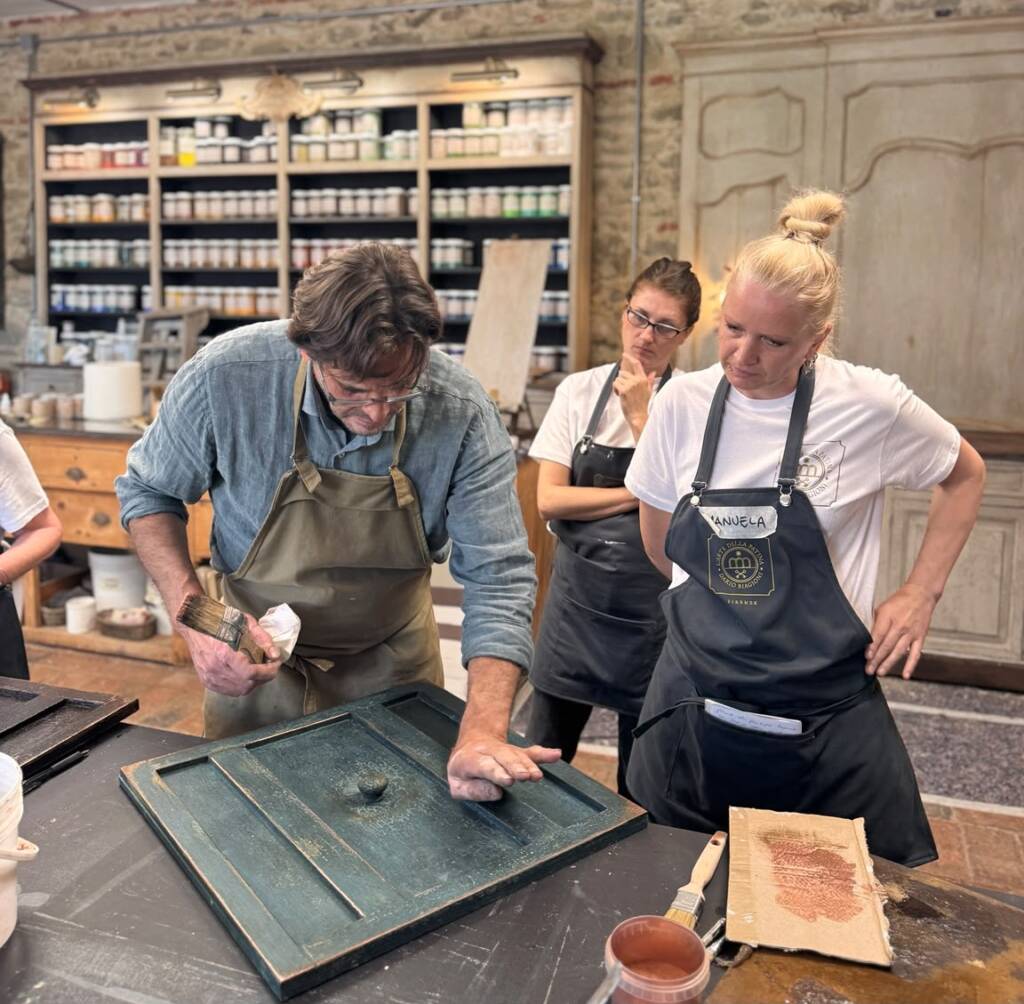
Each participant will personally work on an artifact prepared in our laboratory.
You won't need to bring any furniture or materials. You'll find everything you need to enjoy the experience with peace of mind. We'll use natural pigments, historic preparations, and glues traditionally found in Florentine workshops. Each step will be explained from both a technical and historical perspective, because understanding their meaning is as important as learning how to perform them. The goal isn't to learn a recipe. It's to understand a language. A language that doesn't belong to a single craftsman, but to a tradition spanning centuries.
For this reason, those who understand Patina Antica acquire a way of observing and working that becomes the foundation of many other decorative techniques.
More than a Technique
Over the years, I've learned that restoration teaches much more than just knowledge of materials. It teaches attention.
Patience. Respect. Responsibility. I can't teach love for this profession. Love can't be taught. But I can pass on a way of observing. Of listening. Of working calmly. Because this profession can't be understood all at once. It reveals itself slowly. To those who have the patience to listen.
I don't seek perfection. I seek the truth of the material. Because a lived-in surface tells much more than a perfect one. Every day, work gives something back. Sometimes an answer. Sometimes a question.
And it is precisely this that, after so many years, continues to fascinate me.
Information for the Participant
You don't need to bring anything to participate in the course. Actually...one thing, yes. Yourselves. We'll take care of the rest.
In the workshop, you'll find the object you'll be working on, along with all the tools, materials, and everything else you'll need during the course. We'll provide our expertise. The rest depends on your curiosity, attention, and desire to learn.
Every craft leaves a legacy.
Our responsibility is not to let it go to waste.
That's why I chose to teach it today.
New dates
| ANTIQUE PATINA | SPANISH language | April 6 – 10, 2027 | AVAILABLE SPOTS |
| ANTIQUE PATINA | FRENCH language | 27 Avril – 1 Mai | AVAILABLE SPOTS |
| ANTIQUE PATINA | Italian Language | June 8 – 12, 2027 | AVAILABLE SPOTS |
| ANTIQUE PATINA | English language | June 22 – 26, 2027 | AVAILABLE SPOTS |
Hours
| Tuesday | 14:30 – 17:30 |
| Wednesday | 09:00 – 17:30 |
| Thursday | 09:00 – 17:30 |
| Friday | 09:00 – 17:30 |
| Saturday | 09:00 – 16:00 |
Compila il form
per maggiori info
Oppure scrivici alla nostra mail shop@artedellapatina.com per iscriverti e/o ricevere ulteriori informazioni

